Legislative Update We’re getting down to the final few weeks of session, and the pace is picking up. One thing you’ll notice is that we’re no longer moving the massive, all-in-one bills that showed up at the end of the 2023 session. That’s been a deliberate shift. Right now, we’re focusing on single-issue bills. It’s a more straightforward way to do the work. Each proposal stands on its own, and there’s no guessing what’s buried inside. You can read the bill, understand it, and know exactly what’s being voted on. That’s how this process should work, and it’s something people back home expect. ** A quick reminder, you can read through all the bills we discuss by visiting the House Website here: House Bills . And, you can watch all committee meetings and floor sessions here: House Video Live & Archived ** More Time to Track Down Fraudsters Earlier this week, we passed HF 4425, which extends the statute of limitations for fraud cases from six years to ten. It might not grab headlines, but it addresses a real issue. These cases are complicated and often take years to build. Investigators can spend a long time putting the pieces together, and under current law, they can run out of time before a case is finished. Extending that window gives them a better chance to do their job and hold people accountable.  Basic Oversight Rejected by House Democrats When we got to HF 3629, the grants management bill, my colleague Rep. Davis offered the A3 amendment because there are still some pretty obvious gaps in how we track taxpayer dollars once they go out the door. You can watch his floor speech below: 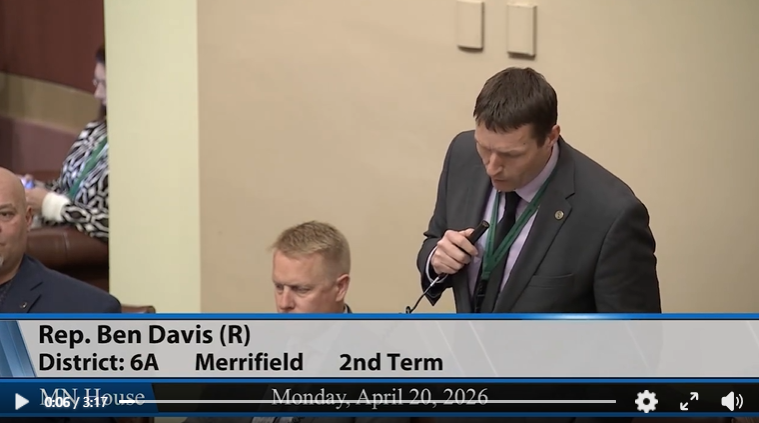 The amendment would have required agencies to report any exceptions they make to standard grant rules so those decisions aren’t happening behind the scenes. It also set up a more consistent approach to oversight based on the size of the grant. Smaller grants would get a virtual check-in, mid-sized grants would require an in-person visit each year, and larger grants would get more attention, including an unannounced visit. It also required agencies to verify how the money was spent before sending out the final payment, with more frequent reviews for larger grants. And if a group isn’t submitting the reports they’re already required to submit, funding would be paused until they do, unless the delay is on the state’s end. At the end of the day, this isn’t asking for anything unreasonable. It’s a fairly basic level of oversight, especially given the amount of money involved. If anything, I think it could go further. Every Democrat voted against it. Fighting Back Against Online Coercion Crimes We also passed HF 2358 this week, which addresses sextortion crimes. This is an issue that’s becoming more common and more serious, especially for young people. It involves individuals being coerced into sharing explicit content online, which is then used to blackmail them. We’ve seen the damage this causes, and in some cases it has led to suicide. This bill strengthens the law and gives law enforcement better tools to respond. Expanding Virtual Learning Options On Thursday, I was honored to be recognized by Parents for School Options for my work supporting virtual learning options for students and families. They’re an advocacy group that works with families across Minnesota to expand access to high-quality education and make sure parents have the ability to choose what works best for their kids. That’s something I’ve spent a lot of time on, and I appreciate the recognition. |