Interim Update Friends and neighbors, I have exciting news—because the 2026 legislative session gavels in on Tuesday, you're in for some fireworks! That means these newsletters are about to trade their offseason scrimmage jersey for full game-day pads. In other words… buckle up! Fraud, Redactions, and the Ongoing Fight for AccountabilityLast Friday, the Minnesota Department of Human Services released the long-awaited Optum report—an external audit reviewing four years of Medicaid billing practices at DHS. Unfortunately, what was supposed to be a roadmap for reform arrived looking more like a blackout poetry project. Every single identified vulnerability and recommendation was redacted, leaving legislators and taxpayers with a report that ultimately confirms initial alarms, but offers little guidance on how to fix them. What we can see is troubling enough. According to the outside consulting firm, “Optum has identified recurring vulnerabilities across all high-risk services flagged by Minnesota DHS. These vulnerabilities stem from weaknesses in monitoring, auditing, and inter-agency communication, which undermine program integrity.” The report goes on to warn that these gaps can lead to beneficiary harm, improper payments, eligibility errors, and intentional fraud, waste, and abuse. None of this comes as a surprise—but it is yet another confirmation that the Walz administration is not treating fraud with the urgency it demands. In fact, by withholding critical details and failing to request stronger oversight tools, they are making it harder to detect and prevent abuse of taxpayer dollars. However, buried within the heavily redacted report was one staggering revelation: 90 percent of Early Intensive Developmental and Behavioral Intervention (EIDBI) claims submitted over the last four years were flagged as potentially fraudulent. During that same period, nearly $750 million in EIDBI claims were submitted. Let that sink in... Here’s the bottom line: when a department acknowledges massive vulnerabilities, admits it lacks the tools to stop fraud, and then shields key findings from public view, it cannot reasonably expect Minnesotans to trust it to police itself. Real accountability requires transparency, stronger oversight, and a commitment to protecting both taxpayers and the vulnerable populations these programs are meant to serve. I want you to know this: stopping these fraud schemes will be a top priority for my colleagues and me in the House as we begin the legislative session. Minnesotans who get up early, work hard, and play by the rules deserve to know their tax dollars are being protected—not siphoned away by criminals exploiting broken systems. You have my word that I will push for real accountability, fight for the tools needed to prevent fraud before it happens, and work to recover every dollar possible that has been stolen from the people of this state. Minnesota is too strong, and its people work too hard, to allow this to continue. Spring Grant Opportunities!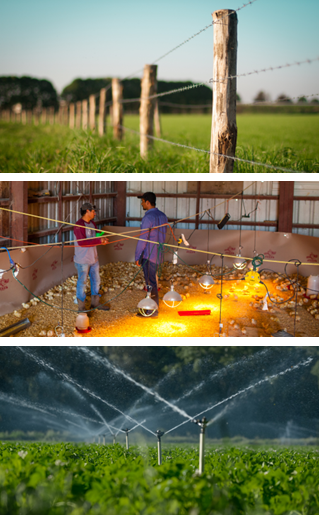 Now, shifting gears to some genuinely good news, and a well-earned win for our agriculture community! Thanks to the Legislature’s Agriculture Committee, a new grant opportunity is now available to support Minnesota’s next generation of farmers. The Beginning Farmer Equipment and Infrastructure Grant Program is designed to help new farmers gain access to the equipment and infrastructure they need to build strong, sustainable operations from the ground up. Through this program, beginning farmers can receive assistance to help cover costs for essential, agriculture-specific equipment used to grow crops, raise livestock, and properly store farm products. The grant also supports critical infrastructure investments, including water access and irrigation systems, fencing, electrical upgrades, walk-in coolers, livestock handling facilities, grain storage, barns, greenhouses, and other production-related structures that help farms succeed long-term. Starting a farm is no small task, and programs like this help ensure that Minnesota agriculture remains strong for generations to come. If you or someone you know may qualify, I strongly encourage you to apply. Applications are due by 4:00 p.m. CT on Thursday, March 26, 2026.  And while we’re talking about supporting working families and strengthening local communities, there is another important grant opportunity worth noting. The Minnesota Department of Employment and Economic Development (DEED), through its Office of Childcare and Community Services, is currently accepting applications for Childcare Economic Development Grants aimed at addressing our state’s ongoing childcare shortage. Reliable childcare is essential for parents to remain in the workforce and for local businesses to thrive, particularly in rural and growing communities. These grants can support a wide range of solutions, including launching new childcare businesses, expanding existing programs, improving long-term sustainability, providing workforce training, making facility upgrades, assisting with licensing requirements, and offering incentives to help retain childcare employees. Applications for this program must be submitted no later than 4:00 p.m. on March 17, 2026. Both of these opportunities represent real investments in Minnesota’s future, supporting the farmers who feed our state and the childcare providers who support our workforce and families every single day. A Great Night with UMC Believe it or not, I do manage to sneak in a little time for some good old-fashioned fun every now and then. This past Thursday, I had the opportunity to spend a few hours connecting with University of Minnesota-Crookston (UMC) alumni. I always appreciate the chance to support our local educational institutions, and UMC is truly a gem right here in our district. The University plays a vital role in preparing our future workforce, strengthening our regional economy, and providing students with opportunities to succeed without having to leave Northwest Minnesota. I’m especially grateful to Chancellor Mary Holz-Clause, for the kind invitation, and it was wonderful to attend alongside Senator Mark Johnson. Events like this are a great reminder of how strong partnerships between education, community leaders, and local businesses help keep our region moving forward. 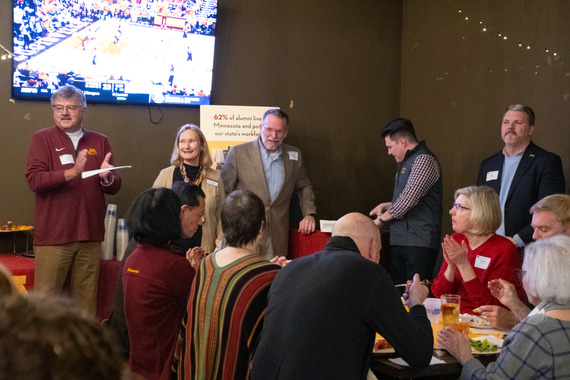 Back to Work, and Just Getting Started! As we head into the back half of the legislative biennium, I am truly excited to continue serving you. While we have already completed the state budget for the two-year cycle—there is still plenty of important work ahead. With the budget in place, we now have greater opportunity to focus on policy solutions that help move Minnesota forward and strengthen our communities. And I will push for a long-overdue bonding bill to build and maintain vital infrastructure including roads, bridges, water systems, and government buildings. One thing that will never change is my commitment to being accessible and responsive to you. My inbox, my office, and my phone are always open. I encourage you to make your voice heard, share your ideas, and advocate for the needs of your family and our community. The best policy decisions come from listening to the people we serve, and your input makes all the difference. Sincerely, Representative Steve Gander Minnesota House of Representatives, District 1B |