 Minnesota Legislature
Jurisdictional restrictions on tribal police could be removed
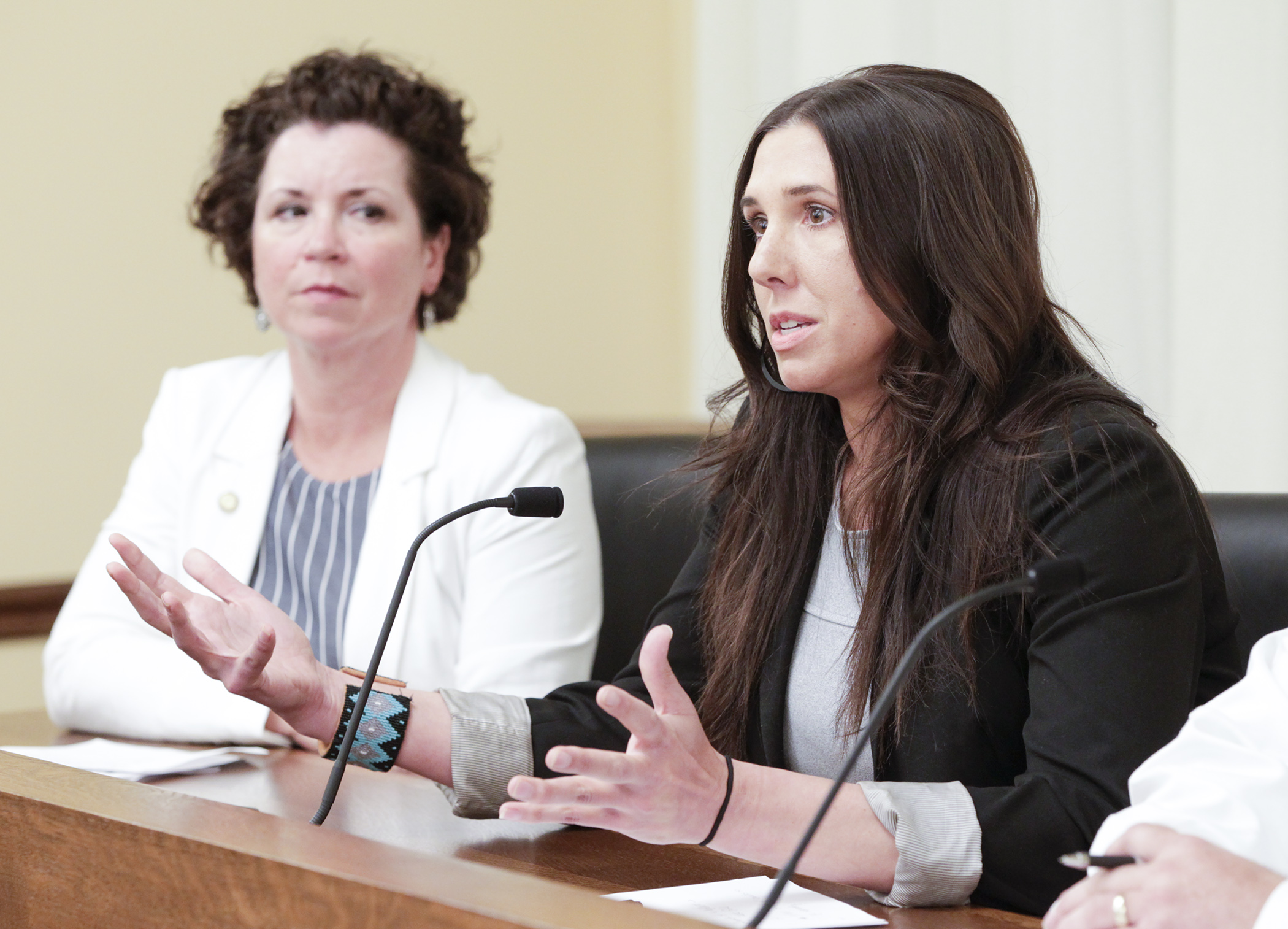
As it stands now, a tribal police department cannot enforce state law on tribal lands unless it first signs a cooperative agreement with the local county sheriff’s department.
Imposing that condition on a sovereign nation is unjust and unnecessary, said Rep. Mary Kunesh-Podein (DFL-New Brighton), who, with Sen. Michael Goggin (R-Red Wing), sponsors HF719/SF1100* to remove that legal requirement and allow jurisdictional law enforcement authority to tribal land regardless of whether a cooperative agreement exists.
“This change will … ensure that the tribal police officers are always allowed to enforce the law on their tribal lands,” said Kunesh-Podein.
Amended to include the House language, the bill was approved Monday by the House Public Safety and Criminal Justice Reform Finance and Policy Division and sent to the House Floor. The Senate version was passed 58-7 by that body May 8.
Discussion focused on whether the proposed change would reclassify tribal police departments as “private entities.” Rep. Brian Johnson (R-Cambridge) said he would have “serious reservations” with the bill if resulted in that change, which he said would make tribal governments immune to lawsuits.
Prairie Island Police Chief Jon Priem and Jessie Seim, general counsel for the Prairie Island Indian Community, assured members the proposed legislation would not result in that change.
“The tribe is liable for its torts and claims,” said Priem. “We have to carry insurance for that purpose, just like any other municipality in the state of Minnesota.”
Seim said the notion that without a cooperative agreement in effect a tribal government is no longer considered a government agency is a “fundamental misunderstanding” of the sovereign relationship between tribes and the state of Minnesota.
The House language is also in its version of the omnibus judiciary and public safety bill (HF2792/SF802*) currently in conference committee.
Related Articles
Search Session Daily
Advanced Search OptionsPriority Dailies
Could 2026 retirements lead to record turnover in the House?
By Lisa Kaczke In the final weeks of the legislative session, House members not seeking re-election to the body have taken a turn at gaveling in a floor session.
It’s an opportunity to loo...
In the final weeks of the legislative session, House members not seeking re-election to the body have taken a turn at gaveling in a floor session.
It’s an opportunity to loo...
How short are the Legislature's short sessions?
By Lisa Kaczke Rep. Ron Kresha (R-Little Falls) was ready to end the session March 25, making the motion to adjourn sine die. But not enough of his colleagues shared that sentiment, defeating ...
