 Minnesota Legislature
‘Fraud Isn’t Free Act’ receives more yes than no votes, but fails to clear House committee
Members from both sides of the aisle agree that fraud is bad.
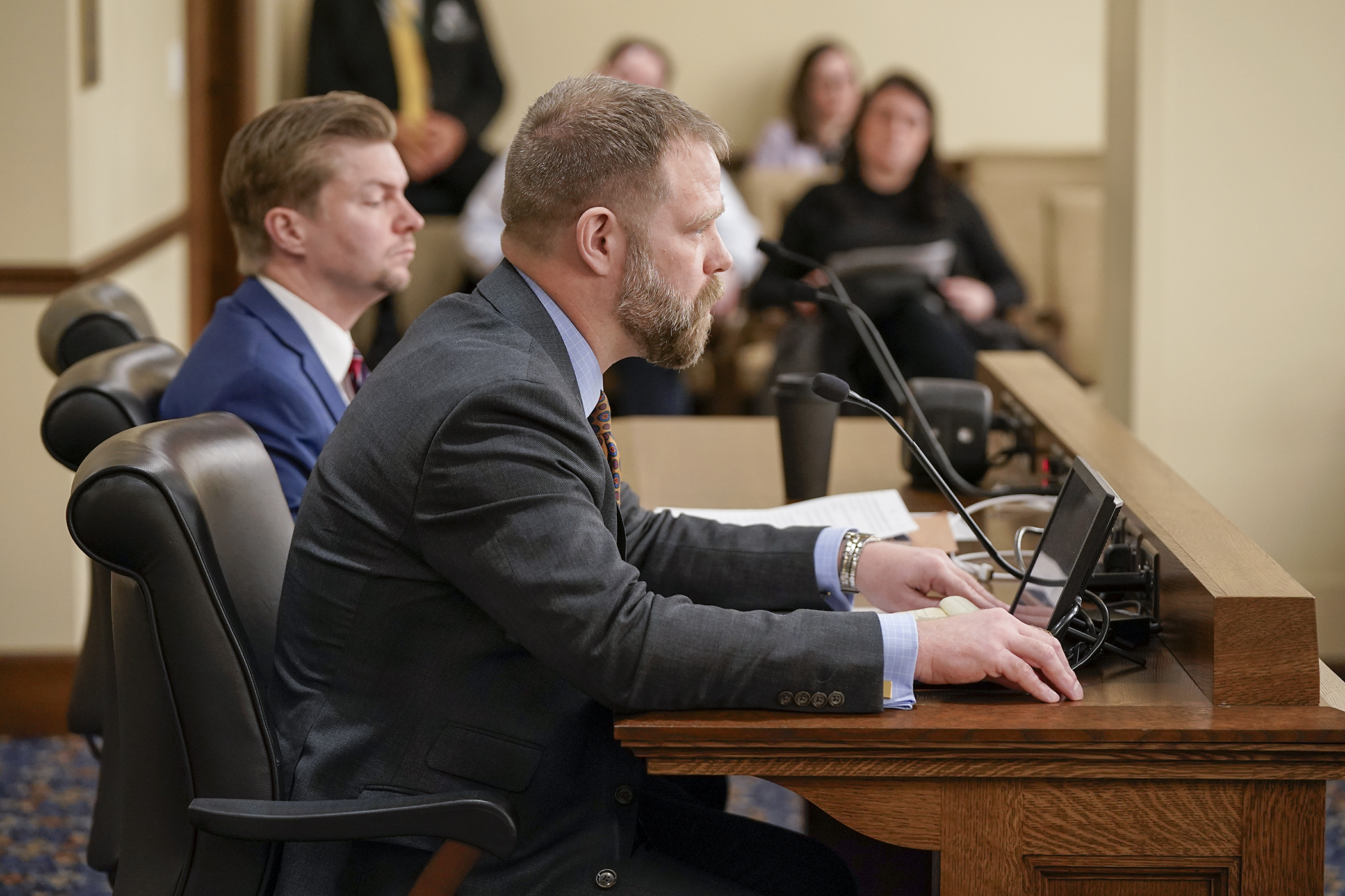
An idea proffered by House Republican Floor Leader Harry Niska (R-Ramsey) is the latest idea put forth to combat the lawlessness in state programs and provide accountability.
As amended, HF3395 is deemed the “Fraud Isn’t Free Act.” It received a 7-6 favorable vote along party lines by the 14-member House State Government Finance and Policy Committee on Tuesday; however, it failed to advance.
Per the power sharing agreement used to conduct business with a 67-all party split, “The affirmative vote of a majority of all appointed committee members, excluding nonvoting members, is required for a standing committee or division to report favorably on a bill or other item of committee business.” Rep. Katie Jones (DFL-Mpls) was excused.
“HF3395 is about people like the behavioral health fabricators. Just two months ago, the legislative auditor revealed that multiple (Department of Human Services) employees, not just one or two bad apples but a systemic group, backdated and fabricated documents to cover up their failure to oversee millions in grants. They didn’t just fail, they actively misled auditors to hide their tracks,” Niska said.
The bill contains salary repercussions for failure.
If a significant loss of funds happens under an agency’s watch, the commissioner would take an immediate 25% pay cut and it would require the firing of, and a five-year state employment ban for, an employee whose intentional or negligent actions allowed fraud to occur. Additionally, a 10% administrative budget cut for the remainder of the biennium would be mandated for agencies failing to protect public funds.
“Compassion for the needy is a virtue, but compassion for fraudsters, for car vandals on the clock, for managers who fabricate documents is a betrayal of every taxpayer in our state. Fraud isn’t free. It’s time for the people in charge to start paying for it,” Niska said.
Rep. Jim Joy (R-Hawley) added, “The private sector does this all the time. When we have a bookkeeper stealing from us, we don’t let the bookkeeper hire the auditor.”
Devin Bruce, director of legislative and political affairs at the Minnesota Association of Professional Employees, said, in part, the bill perpetuates a stereotype that state employees are to blame if fraud occurs.
He added the bill would violate an employee’s due process rights to a fair investigation as stated in collective bargaining agreements and the penalties would ultimately fall on rank-and-file staff instead of division or agency leaders who are ultimately responsible.
Rep. Ginny Klevorn (DFL-Plymouth), a committee co-chair, also spoke in opposition.
“It’s not ready, it’s not preventative and it is actually punitive and harmful to the Minnesotans who are both suffering from fraud, which we all agree should not occur, and it is punitive in that you just unallot these services,” she said.
In a letter to the committee, Minnesota Management and Budget Commissioner Erin Campbell also shared a number of concerns.
“Agency central offices where fraud prevention and compliance functions and tools are often housed are targeted for reductions. Even a small number of reports of fraud would severely hamper an agency’s response capacity following successive 10 percent budget reductions. These funds could only be restored after successful recovery efforts, a process that, if possible, typically takes months or longer,” she wrote.
Other worries include cutting an agency’s budget when neither the agency nor its payee were responsible for an incident and agency controls caught the attempt, beneficiaries might be harmed during the potentially lengthy enrollment suspensions and employee due process rights could be undermined.
Gov. Tim Walz released an anti-fraud-related package last week that includes expanding audit and internal control capacities, creating a centralized Office of Inspector General to investigate and prevent fraud and misuse of public funds across state programs, permanently banning state contracts to individuals with a fraud convictions and increasing penalties for theft of public funds.
Related Articles
Search Session Daily
Advanced Search OptionsPriority Dailies
Could 2026 retirements lead to record turnover in the House?
By Lisa Kaczke In the final weeks of the legislative session, House members not seeking re-election to the body have taken a turn at gaveling in a floor session.
It’s an opportunity to loo...
In the final weeks of the legislative session, House members not seeking re-election to the body have taken a turn at gaveling in a floor session.
It’s an opportunity to loo...
How short are the Legislature's short sessions?
By Lisa Kaczke Rep. Ron Kresha (R-Little Falls) was ready to end the session March 25, making the motion to adjourn sine die. But not enough of his colleagues shared that sentiment, defeating ...
