 Minnesota Legislature
After yearlong push, House passes inspector general bill aimed at combating fraud
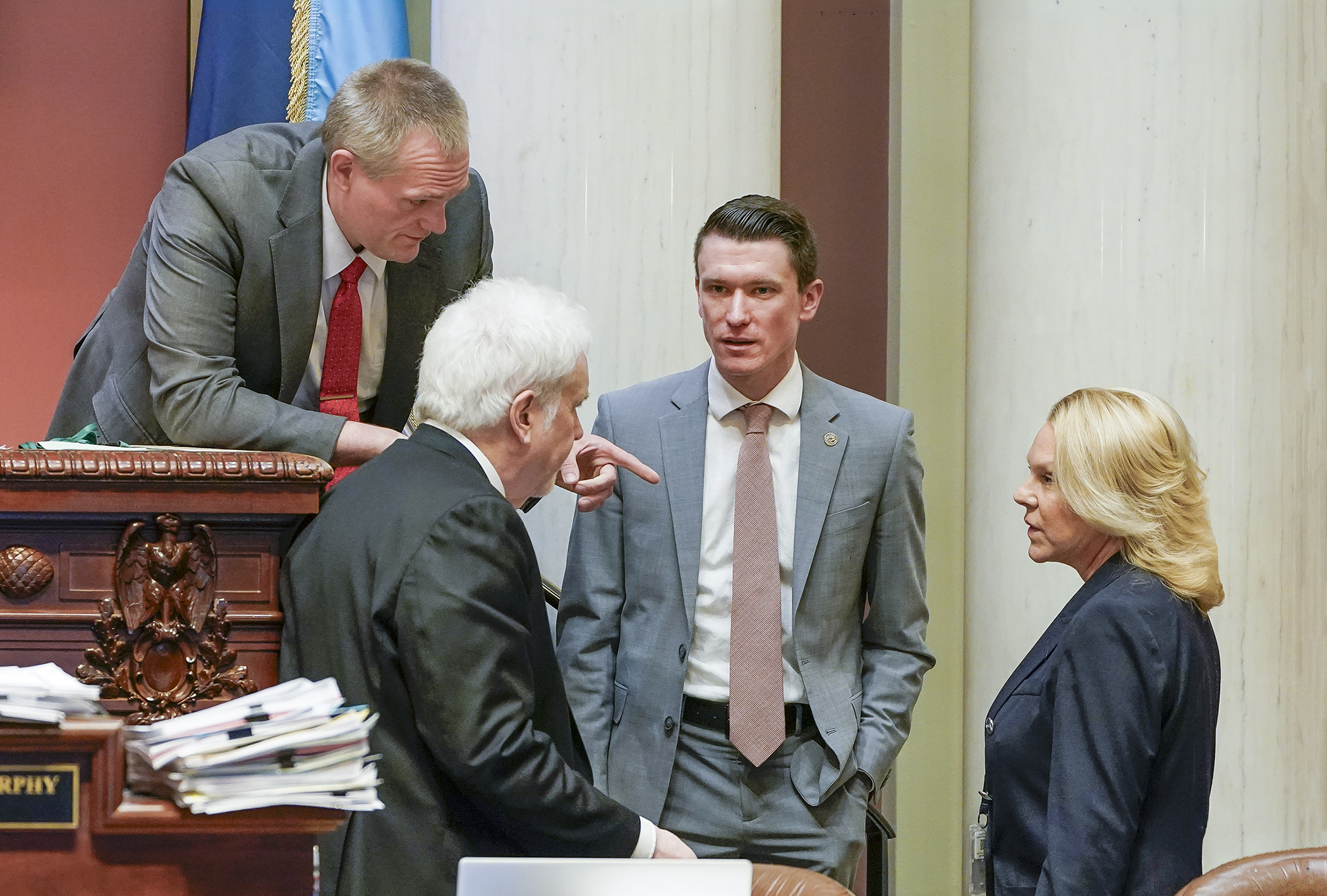
One year ago Friday, the Senate overwhelmingly passed a bill concerning one of the highest-profile issues of this legislative biennium.
But the House took no action in 2025.
After months of stakeholder meetings — including representatives of all four legislative caucuses — to create an independent watchdog, the House finally passed a bill Thursday to create an Office of the Inspector General. The vote was 127-5.
Fully operational by Sept. 1, 2027, the office would oversee current agency-based inspectors general and investigate credible allegations of fraud or misuse in state-administered programs.
“This is a powerful office meant to address a critical concern: fraud against our public programs. Fraud in any form is unacceptable, and we should have zero tolerance for it here in Minnesota,” said Rep. Matt Norris (DFL-Blaine). “… This bill will help send a clear message that the days of defrauding Minnesota’s public programs is over.”
He and Sen. Heather Gustafson (DFL-Vadnais Heights) sponsor HF1338/SF856* that, as amended twice to clean up language, now returns to the Senate for concurrence. As originally proposed, it was passed 60-7 by that body May 8, 2025.
“I hope this is the beginning of the light at the end of the tunnel, this and some of the other things that we’ve passed, because Minnesotans are mad and they deserve more. We need, as a state, to get our reputation back,” said Rep. Patti Anderson (R-Dellwood), a former state auditor. She sponsors HF1, an Office of Inspector General bill that was approved by five House committees last session.
The office would be an independent entity in the executive branch “responsible for ensuring accountability, transparency, and integrity in the operation of state executive branch agencies and programs.” The inspector general would report directly to the governor.
The governor would appoint the inspector general to a five-year term; however, that person would be subject to a three-fifths supermajority confirmation by the Senate. An eight-member joint House-Senate commission would recommend candidates.
A price tag of $7.29 million in Fiscal Year 2027 is anticipated before a combined $23.01 million would be needed in the 2028-29 biennium.
“Protecting, preventing $9 billion of fraud pays for 750 years of this office,” House Republican Floor Leader Harry Niska (R-Ramsey) said. “So it costs money, but that’s a cost well worth it to the hardworking taxpayers of Minnesota who have been stolen from for years and years and years.”
In addition to investigating fraud in state programs, 10 specific inspector general duties are prescribed in the bill, including:
- establishing standards and best practices concerning the operation, investigations, and fraud prevention processes of agency inspectors general;
- alerting relevant state agencies when there is a credible allegation of fraud or misuse;
- facilitating information sharing between agencies and coordinating investigations involving multiple agencies;
- investigating a private entity or local unit of government administering a state program, or any private recipient of state funds or services, to ensure proper use of state funds;
- issuing public reports detailing completed investigations and corrective actions; and
- maintaining a list that includes each program and individual for which the inspector general has obtained a court order or made a recommendation to freeze or cease payment.
Beginning Jan. 1, 2028, the office would have the authority to appoint licensed peace officers and establish a law enforcement agency to be called the Inspector General Anti-Fraud and Waste Bureau that would conduct statewide investigations and make arrests. The agency’s primary jurisdiction would be fraud and misuse cases. An amendment to remove this section was unsuccessful.
Anderson said Republicans would not support the bill without this provision. It may not be needed anyway.
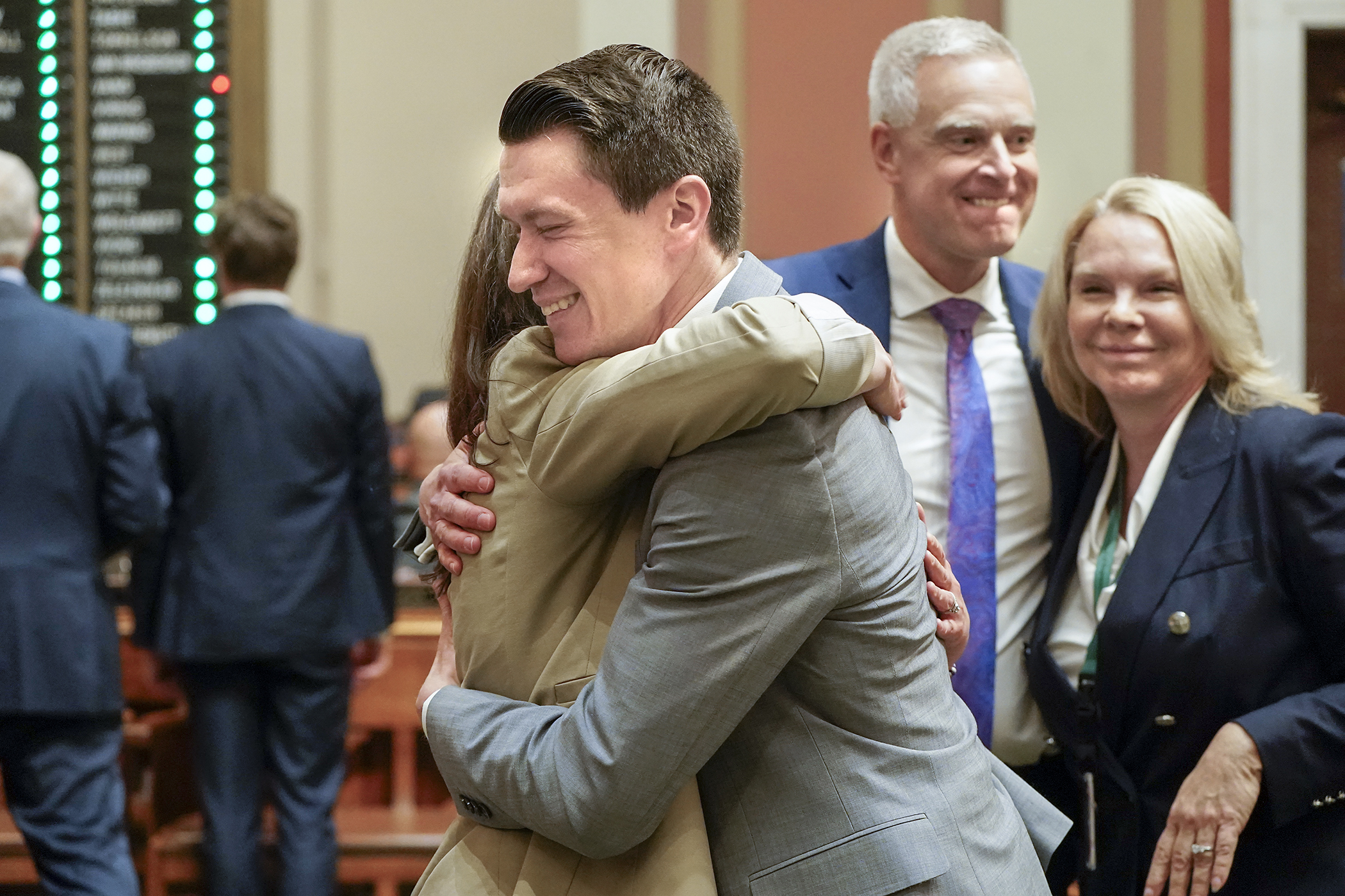 Rep. Matt Norris hugs Sen. Heather Gustafson following Thursday’s House passage of HF1338/SF856* to establish an independent Office of the Inspector General in the executive branch. Also pictured is Sen. Michael Kreun and Rep. Patti Anderson. (Photo by Michele Jokinen)
 Before then the office could work with the Bureau of Criminal Apprehension to determine if there is a need to create a separate law enforcement agency. The BCA Financial Crimes and Fraud Section now investigates state program fraud, insurance fraud, wage theft, and financial crimes related to identity theft.
“There is no reason to move this work out of the BCA which does excellent work. … We don’t need to duplicate their work with this future law enforcement agency,” said Rep. Kelly Moller (DFL-Shoreview), who offered the amendment.
Niska said Minnesotans do not trust the current law enforcement under the direction of the governor and the attorney general to arrest and prosecute fraudsters. “We are fighting for an independent and empowered inspector general, fraud cops, fraud prosecutors independent of the governor to do this.”
Three amendments offered by Rep. Ginny Klevorn (DFL-Plymouth) failed to get support or were withdrawn: adding to its list of office duties “establish appropriate prepayment review procedures for all agencies”; $15 million to improve data sharing between agencies and enhance security and verification capabilities; and rename a potential Inspector General Anti-Fraud and Waste Bureau the Anti-Fraud and Enforcement Unit.
Related Articles
Search Session Daily
Advanced Search OptionsPriority Dailies
Could 2026 retirements lead to record turnover in the House?
By Lisa Kaczke In the final weeks of the legislative session, House members not seeking re-election to the body have taken a turn at gaveling in a floor session.
It’s an opportunity to loo...
In the final weeks of the legislative session, House members not seeking re-election to the body have taken a turn at gaveling in a floor session.
It’s an opportunity to loo...
How short are the Legislature's short sessions?
By Lisa Kaczke Rep. Ron Kresha (R-Little Falls) was ready to end the session March 25, making the motion to adjourn sine die. But not enough of his colleagues shared that sentiment, defeating ...
