 Minnesota Legislature
Higher ed conferees adopt areas of agreement, prep for final negotiations
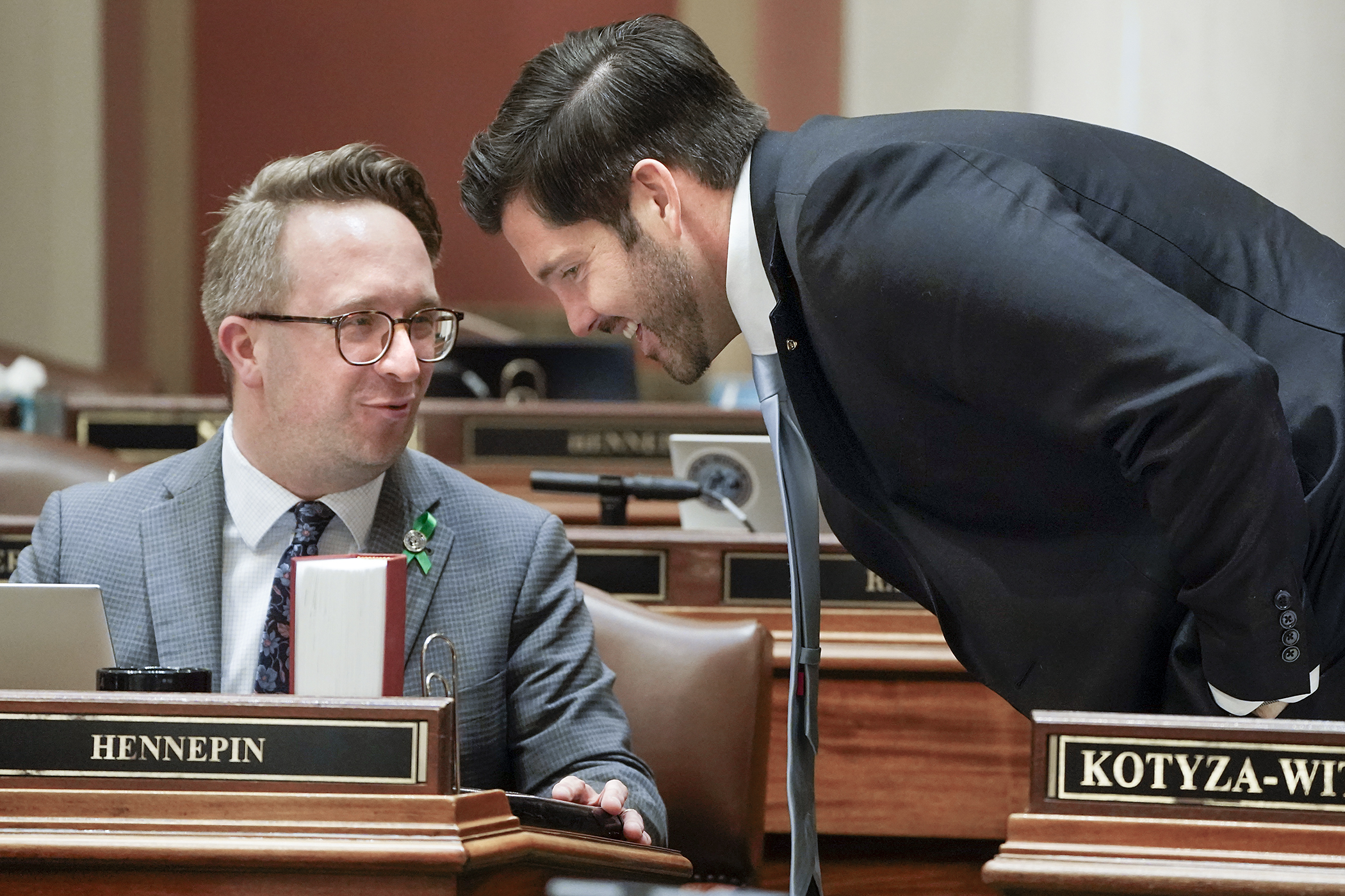
With the legislative session well into its own version of finals week, the higher education conference committee made significant progress Thursday.
Members reviewing House and Senate versions of HF4252*/SF3943, took testimony and adopted several provisions where agreement exists.
The supplemental budget agreement among state leaders provides $4.5 million this biennium for higher education purposes.
But a substantial amount of work may remain when the committee reconvenes Friday. Lawmakers also pointed to funding gaps in state financial aid programs — among them a newly identified $670,000 shortfall in the Fostering Independence Higher Education Grant program — even though the issue may not be addressed in this bill.
“This is a population we committed to, and we need to figure out how we can help them going forward,” Rep. Marion Rarick (R-Maple Lake) said of students from the foster care system eligible for the grants.
Among the shared — and adopted — items in bills sponsored by Rep. Dan Wolgamott (DFL-St. Cloud) and Sen. Omar Fateh (DFL-Mpls) is a fraud-prevention measure that would allow the Office of Higher Education to deny aid to applicants found to have committed fraud. Many other provisions were technical or administrative changes requested by the Office of Higher Education, including updates to statutory language, clarification of reporting structures, tightened data-sharing requirements, and alignment of statute with current practices.
Other same-and-similar provisions would remove a rule giving work-study priority to students enrolled in at least 12 credits and allow Rochester Community and Technical College and the City of Rochester to enter into a recreational lease agreement.
The committee also approved a House-only provision to require colleges to notify students when they are enrolled in developmental courses that do not earn credit toward a degree or certificate.
[MORE: View the spreadsheet, side-by-side summary]
Board of Regents
Selection of University of Minnesota Board of Regents generated considerable discussion in the House Higher Education Finance and Policy Committee, but no changes are included in the House bill.
Typically, the Regent Candidate Advisory Council recruits and screens candidates before forwarding recommendations to a joint legislative committee. That committee may accept additional nominations before sending names to a joint convention, which elects regents, generally in early March. The joint convention was never called in 2025 and the governor made appointments without legislative input.
A Senate provision would limit the pool of candidates to those vetted by the advisory council, which is composed of House and Senate appointees, includes student members, and is structured to maintain partisan and geographic balance.
Rarick previously proposed an amendment to limit candidates to those recommended by the joint legislative committee, and she is expected to offer a similar proposal when the conference committee marks up its final report.
House provisions
Among the House-only provisions is $1.5 million annually to Minnesota State for software to automatically authenticate student identities and reduce fraud by so-called “ghost students.”
And a $5,000 grant to Bemidji State University would be used to replant trees lost in last summer’s derecho. Rarick said they would be fast-growing trees developed by the University of Minnesota. “Bemidji State is known for being in the woods, and the woods are no longer there,” she said.
Senate provisions
Among the Senate-only provisions are ones that would:
• aim to prevent public colleges and universities from charging all students a fee to subsidize compensation to student-athletes;
• allow Minnesota State employees to take paid leave to donate blood, consistent with other state workers;
• prohibit the University of Minnesota Medical School from allowing for-profit entities to control its curriculum; and
• require priority registration for pregnant and parenting students.
Related Articles
Search Session Daily
Advanced Search OptionsPriority Dailies
Could 2026 retirements lead to record turnover in the House?
By Lisa Kaczke In the final weeks of the legislative session, House members not seeking re-election to the body have taken a turn at gaveling in a floor session.
It’s an opportunity to loo...
In the final weeks of the legislative session, House members not seeking re-election to the body have taken a turn at gaveling in a floor session.
It’s an opportunity to loo...
How short are the Legislature's short sessions?
By Lisa Kaczke Rep. Ron Kresha (R-Little Falls) was ready to end the session March 25, making the motion to adjourn sine die. But not enough of his colleagues shared that sentiment, defeating ...
