 Minnesota Legislature
One year in, BCA, commerce leaders say new fraud unit successfully created
To show the success of merging two fraud investigation units last year, state leaders pointed to the charges filed in December against the Lutsen Resort owner accused of setting the 2024 fire that destroyed the historic North Shore lodge.
The 22-month investigation was a collaboration that included the fire marshal in the Bureau of Criminal Apprehension and insurance fraud investigators with the Department of Commerce. That collaboration continued after the Commerce Fraud Bureau moved to the BCA in January 2025 and the result was felony charges of arson and insurance fraud.
“I think successful investigations like this are a hallmark. They were a hallmark of the fraud bureau and you can see that that investigation… was a really good indication that the transition worked well,” Commerce Commissioner Grace Arnold told the House Commerce Finance and Policy Committee Wednesday.
A January 2025 executive order by Gov. Tim Walz moved the Commerce Fraud Bureau from the Commerce Department to the BCA to create a new Financial Crimes and Fraud Section.
The commerce unit, partially funded by assessments on insurance companies, was tasked with investigating cybercrime, consumer scams and cryptocurrency crimes and was statutorily required to spend 70% of its time on insurance fraud. The new unit is now tasked with investigating fraud in state agencies, insurance fraud, wage theft and financial crimes related to identity theft.
[MORE: BCA presentation on Financial Crimes and Fraud Section]
Commerce committee members were skeptical of the change last year, concerned that commerce investigators would be reassigned to violent crime investigations and there’d be fewer investigations of white collar crime.
Arnold and BCA Superintendent Drew Evans said there haven’t been any operational “hiccups,” although they’ve needed to address items such as ensuring the BCA has access to databases the investigators used in the Department of Commerce.
“The teams are definitely working well together. It’s one big team now. It’s not two different teams working on the same stuff,” Evans said.
Evans said none of the fraud unit’s staff has been reassigned to violent crime investigations. However, a couple staff have taken on additional responsibilities at the BCA related to their career aspirations since joining from the Commerce Department.
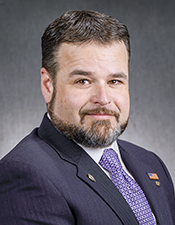
Some committee members said Wednesday their worry has dissipated and that Evans is earning their trust. Rep. Josh Heintzeman (R-Nisswa) said although some of the outcomes have shown it was a good decision, he still has some trepidation. He noted that Minnesotans are concerned about fraud and he wants the BCA to provide examples and data to show residents that the merger was the right choice.
Fraud investigations
In 2025, the Financial Crime and Fraud Section received 2,889 referrals for cases from the public, insurance companies, law enforcement agencies or other government regulatory entities, according to Evans.
Of those referrals, 259 investigations were initiated involving 538 allegations and most are still open. Thirty-nine cases were referred to state and federal prosecutors, and charges were filed with an economic impact of more than $33 million.
The referrals also included 246 complaints related to state programs. They involve theft of public funds, fraud against programs funded or administered by the state and fraud against individual residents and don’t include federally funded programs such as Medicaid. Of those 246 complaints, 46 cases were referred to other agencies, 165 were reviewed and closed due to insufficient evidence and 35 are under active investigation by the unit.
Evans said the BCA is expected to soon release a report on the new requirement, which began in January 2026, that state agencies report to the BCA suspected fraud involving state programs with losses of more than $10,000.
Case leads and requests for investigative assistance from other law enforcement agencies has increased in the past five years, with 1,333 being received last year. As crimes become increasingly complex, particularly those involving cryptocurrency, local law enforcement agencies are reaching out to the BCA more often for assistance, Evans said.
The new unit’s personnel includes one special agent in charge, four assistant special agents in charge, 32 special agents, seven criminal intelligence analysts and two senior investigators. The unit has an annual budget of $13 million, which includes $5.1 million in assessments on insurance companies and $2.6 million in auto theft prevention grants.
Related Articles
Search Session Daily
Advanced Search OptionsPriority Dailies
Could 2026 retirements lead to record turnover in the House?
By Lisa Kaczke In the final weeks of the legislative session, House members not seeking re-election to the body have taken a turn at gaveling in a floor session.
It’s an opportunity to loo...
In the final weeks of the legislative session, House members not seeking re-election to the body have taken a turn at gaveling in a floor session.
It’s an opportunity to loo...
How short are the Legislature's short sessions?
By Lisa Kaczke Rep. Ron Kresha (R-Little Falls) was ready to end the session March 25, making the motion to adjourn sine die. But not enough of his colleagues shared that sentiment, defeating ...
