 Minnesota Legislature
Law enforcement asks legislators to ban cryptocurrency kiosks to curb scams
When Woodbury police officers responded to a call of a senior looking confused at a cryptocurrency kiosk at a gas station, they learned she was the victim of a scam that had been going on for eight months. She had already completed at least 10 Bitcoin transactions in six months.
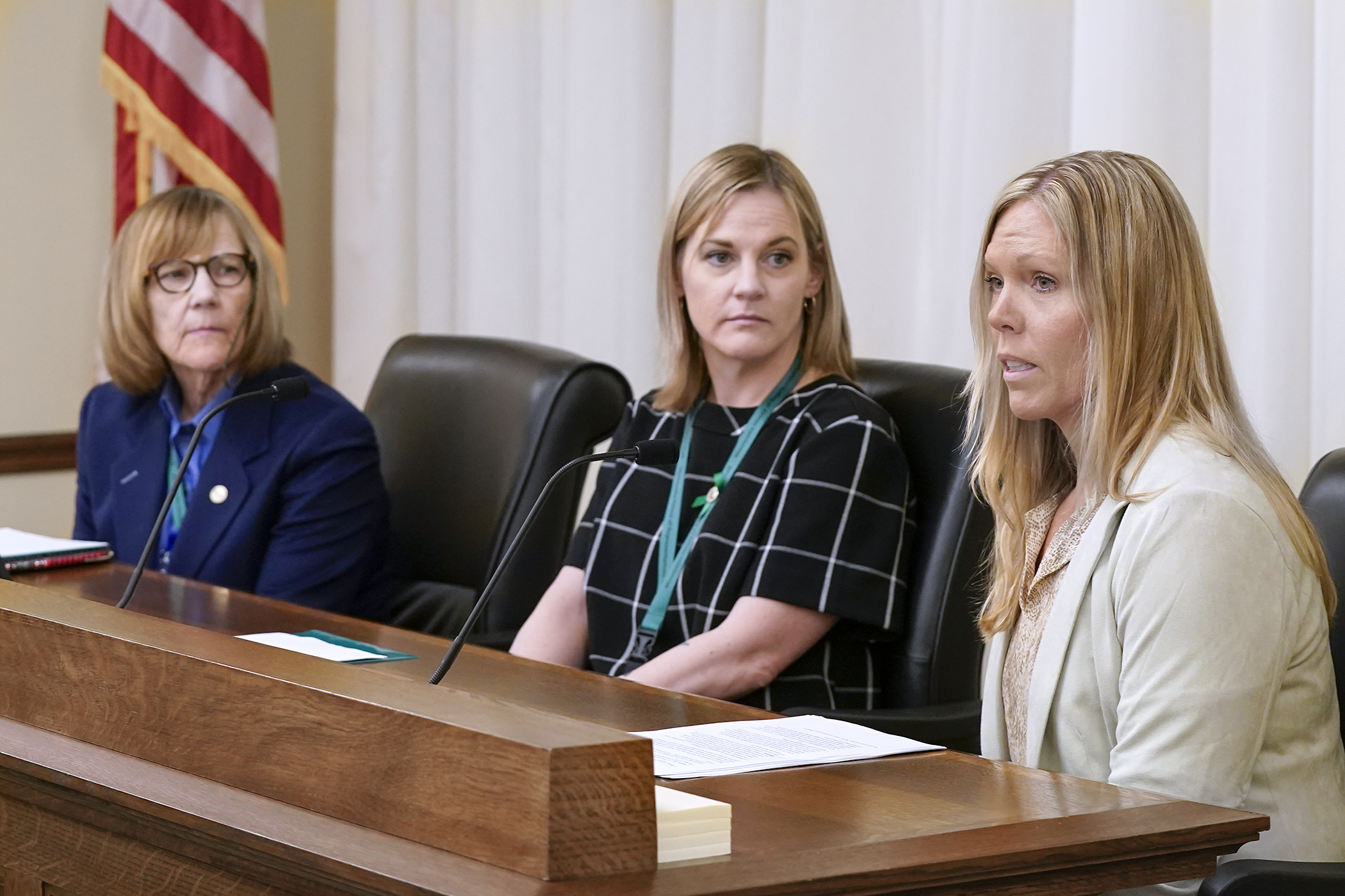
“She was already vulnerable with fixed income and food and housing insecurity. APS, adult protection services, had to become involved due to her dire circumstances. She had been giving 50% of her income per month to the scammers and she was afraid she was going to have to live out of her car because she had no money left,” Woodbury Det. Lynn Lawrence told the House Commerce Finance and Policy Committee Thursday.
Law enforcement officers described scam cases involving cryptocurrency kiosks that targeted older Minnesotans and defrauded victims out of tens of thousands of dollars. But Larry Lipka, general counsel at digital currency platform CoinFlip that operates 50 kiosks in Minnesota, said the company understands there’s a scam problem in the United States, but kiosks aren’t the sole avenue for scams and kiosk operators aren’t the bad actors.
“The scammers are vigilant. They’re terrible and they’re stealing from Americans,” Lipka said.
Sponsored by Rep. Erin Koegel (DFL-Spring Lake Park), HF3642, as amended, would ban virtual currency kiosks statewide.
The state has 350 licensed kiosks that are operated by eight to 10 companies, according to Sam Smith, government relations director at the Department of Commerce.
Kiosks look like ATMs but allow people to use cash or a debit card to purchase cryptocurrency. In scams, the cryptocurrency goes into a digital wallet controlled by the scammer. Koegel said the bill would only affect physical kiosks and people could still conduct cryptocurrency transactions online.
Rep. John Huot (DFL-Rosemount) likened a ban on kiosks to the ban on cigarette vending machines in public, pointing out that it was about the public good. Rep. Ron Kresha (R-Little Falls) responded, “The fact of the matter is we haven’t solved the cigarette problem.”
Kresha said the state’s tools are limited compared to kiosk operators. He’d rather hear about how companies are working with law enforcement and what they’re putting in place to get ahead of the scams.
Rep. Keith Allen (R-Kenyon) said he echoes Kresha’s comments, but he’s also heard from his local police department.
Faribault Police Chief John Sherwin wrote to the committee that Faribault residents have reported losses of more than $500,000 due to kiosks since 2022 and that’s likely only 25% of all instances occurring in the city due to it being an underreported crime.
“That’s $2 million that’s left a rural community like mine. Those dollars could have been turning in that community; they could have been doing a lot of good,” Allen said.
The commerce committee laid the bill over for future consideration. Co-Chair Rep. Tim O'Driscoll (R-Sartell) said both sides of the aisle are teaming up to find agreement on bill language that can pass by the end of session due to the consumer protection concerns related to the kiosks.
Scam cases
The scams often involve an emotional element, similar to other non-cryptocurrency scams. In another Woodbury case, Lawrence said the scammer had so much power over the victim that she questioned whether the police officers were real police when they were called to the kiosk by a witness.
Once at a kiosk, which can be found in gas stations and grocery stores, victims are told by the scammer to input cash using an existing customer number and are prompted to bypass warning prompts to circumvent current state law regulating cryptocurrency kiosks.
[READ: Benton County Sheriff Troy Heck’s letter]
Once the cash is converted into cryptocurrency, it’s quickly gone and often untraceable, officers said. In detailing a case where a 78-year-old woman lost $80,000 in a scam involving a kiosk, St. Cloud Police Sgt. Jake Lanz said, “These cases, for us to investigate, are incredibly difficult based off how the money moves from the ATM and then transactions that typically lead overseas outside of our jurisdiction.”
2024 state law
A law passed in 2024 to crack down on cryptocurrency fraud includes a requirement that companies issue refunds to new customers if they’re the victims of fraud and sets a limit of $2,000 in deposits for new customers.
Lawrence said that because of the law some victims in Woodbury have been instructed by scammers to travel to a kiosk in Wisconsin. Lanz said more than half of the cases investigated by St. Cloud Police are outside the protections put in place in 2024.
Smith said scams involving kiosks are a growing problem and the financial loss is “emotionally devastating and embarrassing” for victims. The Commerce Department directly received 70 complaints last year totaling $540,000 in losses, which doesn’t include reports received by law enforcement. Forty-eight percent of consumers received a refund and those refunds average just 16% of their total loss, he said.
Safeguards put in place in 2024 are easily circumvented by scammers by instructing victims to deposit multiple small amounts, bypass kiosk warnings and disclosures, and avoid the new customer provision, he said. “Previous efforts to increase consumer protections for crypto kiosks have failed.”
[READ: CoinFlip testimony]
CoinFlip supports the 2024 changes and supports the state adopting strict regulations, such as a refund to all customers who are scam victims, instead of a full ban. Among his suggestions, Lipka noted that CoinFlip has a hold period after transactions by new customers that serves as a “cooling off” time where the transaction can be reversed.
“I know that these tools work because we’ve got 8,000 customers in the state, we have 12,000 transactions that happened in the last year and less than 1% of those were refundable by customers,” he said.
If a company isn’t refunding a customer who should be, the state’s financial regulators should be going after them and revoke their license, he said. “It is inappropriate to ban a legal product because fraud is happening. Not our fault.”
Related Articles
Search Session Daily
Advanced Search OptionsPriority Dailies
Could 2026 retirements lead to record turnover in the House?
By Lisa Kaczke In the final weeks of the legislative session, House members not seeking re-election to the body have taken a turn at gaveling in a floor session.
It’s an opportunity to loo...
In the final weeks of the legislative session, House members not seeking re-election to the body have taken a turn at gaveling in a floor session.
It’s an opportunity to loo...
How short are the Legislature's short sessions?
By Lisa Kaczke Rep. Ron Kresha (R-Little Falls) was ready to end the session March 25, making the motion to adjourn sine die. But not enough of his colleagues shared that sentiment, defeating ...
